日常生活の漢字 (N4 Kanji Part 1: Everyday Life)
Learning objectives
- Master N4 kanji related to the physical body and mental states (心, 目, 耳, 手, 足).
- Identify essential kanji for meals and ingredients (飯, 牛, 魚).
- Understand verbs of motion and daily habits in kanji form.
- Learn about Japanese eating etiquette and cultural expressions.
Welcome to the N4 level! Now that you have mastered the foundational N5 kanji, it is time to expand your vocabulary with characters you will encounter every single day in Japan. This chapter focuses on the human body, the food we eat, and the actions that define our daily routines.
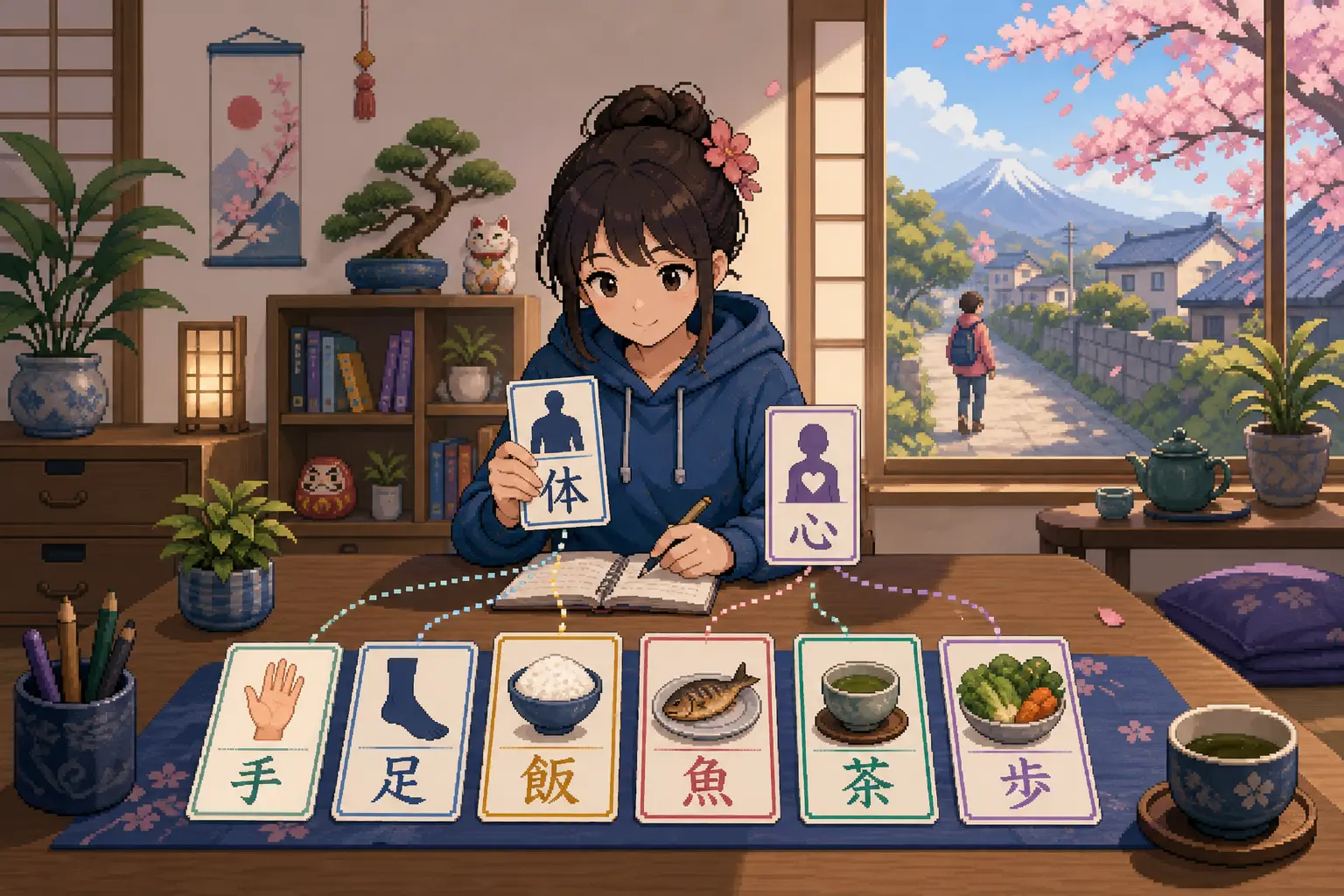
1. The Human Body & Mind (体と心)
Understanding the body is essential for health, fashion, and expressing feelings. We start with the core physical parts and the “heart” or “mind” (心).
On'yomi
タイ、テイ
Kun'yomi
からだ
Examples
- 体【からだ】body
- 体育【たいいく】physical education
- 体力【たいりょく】physical strength
On'yomi
トウ、ズ、ト
Kun'yomi
あたま
Examples
- 頭【あたま】head
- 頭痛【ずつう】headache
- 先頭【せんとう】the head/front
On'yomi
ガン
Kun'yomi
かお
Examples
- 顔【かお】face
- 洗顔【せんがん】face washing
- 笑顔【えがお】smiling face
On'yomi
セイ、ショウ
Kun'yomi
こえ
Examples
- 声【こえ】voice
- 大声【おおごえ】loud voice
- 音声【おんせい】sound/audio
On'yomi
シン
Kun'yomi
こころ
Examples
- 心【こころ】heart
- 安心【あんしん】relief/peace of mind
- 中心【ちゅうしん】center
On'yomi
モク、ボク
Kun'yomi
め
Examples
- 目【め】eye
- 目的【もくてき】purpose
- 一日目【いちにちめ】the first day
On'yomi
ジ
Kun'yomi
みみ
Examples
- 耳【みみ】ear
- 耳鼻科【じびか】ENT clinic
- 初耳【はつみみ】hearing for the first time
On'yomi
シュ
Kun'yomi
て
Examples
- 手【て】hand
- 上手【じょうず】skillful
- 下手【へた】unskillful
On'yomi
ソク
Kun'yomi
あし、た・りる
Examples
- 足【あし】foot/leg
- 足りる【たりる】to be sufficient
- 遠足【えんそく】excursion
最近、体が少し重いです。
Saikin, karada ga sukoshi omoi desu.
Recently, my body feels a bit heavy.
彼は頭がいいし、心も広いです。
Kare wa atama ga ii shi, kokoro mo hiroi desu.
He is smart and also broad-minded (generous).
手を洗ってから、目と耳をチェックしてください。
Te o aratte kara, me to mimi o chekku shite kudasai.
Please wash your hands, then check your eyes and ears.
大きな声で話すと、足が痛くなるのを忘れます。
Ookina koe de hanasu to, ashi ga itaku naru no o wasuremasu.
When I talk in a loud voice, I forget that my feet are starting to hurt.
寒いので、顔と耳が赤くなりました。
Samui node, kao to mimi ga akaku narimashita.
Because it's cold, my face and ears turned red.
体育の授業で、手足の運動をしました。
Taiiku no jugyou de, teashi no undou o shimashita.
In the physical education class, we did hand and foot exercises.
日本へ行く目的は、有名な建築を見ることです。
Nihon e iku mokuteki wa, yuumeina kenchiku o miru koto desu.
The purpose of going to Japan is to see famous architecture.
テストの結果を見て、安心しました。
Tesuto no kekka o mite, anshin shimashita.
I felt relieved after seeing the test results.
2. Food & Drink (飲食)
Food is the soul of culture. These kanji will help you navigate menus and talk about your favorite meals.
On'yomi
ニク
Kun'yomi
-
Examples
- 肉【にく】meat
- 牛肉【ぎゅうにく】beef
- 豚肉【ぶたにく】pork
On'yomi
ハン
Kun'yomi
めし
Examples
- ご飯【ごはん】meal/rice
- 夕飯【ゆうはん】dinner
- 朝飯【あさめし】breakfast (informal)
On'yomi
ギュウ
Kun'yomi
うし
Examples
- 牛【うし】cow
- 牛肉【ぎゅうにく】beef
- 牛乳【ぎゅうにゅう】milk
On'yomi
ギョ
Kun'yomi
さかな、うお
Examples
- 魚【さかな】fish
- 金魚【きんぎょ】goldfish
- 焼き魚【やきざかな】grilled fish
On'yomi
チャ、サ
Kun'yomi
-
Examples
- お茶【おちゃ】tea (green tea)
- 紅茶【こうちゃ】black tea
- 茶色【ちゃいろ】brown
On'yomi
ヤ
Kun'yomi
の
Examples
- 野菜【やさい】vegetable
- 分野【ぶんや】field (of study)
- 長野【ながの】Nagano (prefecture)
On'yomi
サイ
Kun'yomi
な
Examples
- 野菜【やさい】vegetable
- 白菜【はくさい】Chinese cabbage
- 総菜【そうざい】side dish
ご飯
Nounごはん
gohan
Meal / Cooked rice
牛肉
Nounぎゅうにく
gyuuniku
Beef
魚料理
Nounさかなりょうり
sakanaryouri
Fish dish
野菜
Nounやさい
yasai
Vegetable
お茶
Nounおちゃ
ocha
Green tea
日本人は毎日ご飯と魚を食べます。
Nihonjin wa mainichi gohan to sakana o tabemasu.
Japanese people eat rice and fish every day.
牛肉は高いですが、とても美味しいです。
Gyuuniku wa takai desu ga, totemo oishii desu.
Beef is expensive, but it is very delicious.
野菜をたくさん食べて、温かいお茶を飲みましょう。
Yasai o takusan tabete, atatakai ocha o nomimashou.
Let's eat lots of vegetables and drink warm tea.
夕飯には焼き魚と白菜のスープを食べました。
Yuuhan ni wa yakizakana to hakusai no suupu o tabemashita.
For dinner, I ate grilled fish and napa cabbage soup.
朝ご飯に冷たい牛乳を一杯飲みました。
Asagohan ni tsumetai gyuunyuu o ippai nomimashita.
I drank a glass of cold milk for breakfast.
紅茶よりお茶のほうが好きです。
Koucha yori ocha no hou ga suki desu.
I like green tea more than black tea.
分野を問わず、色々な野菜を食べることが大切です。
Bunya o towazu, iroirona yasai o taberu koto ga taisetsu desu.
Regardless of the type, it is important to eat various vegetables.
3. Movement and Actions (行動)
These verbs describe the physical movements we make throughout the day.
On'yomi
ソウ
Kun'yomi
はし・る
Examples
- 走る【はしる】to run
- 競走【きょうそう】race
On'yomi
ホ、ブ、フ
Kun'yomi
ある・く、あゆ・む
Examples
- 歩く【あるく】to walk
- 散歩【さんぽ】a stroll/walk
- 歩道【ほどう】sidewalk
On'yomi
キ
Kun'yomi
お・きる、お・こす
Examples
- 起きる【おきる】to wake up
- 早起き【はやおき】early rising
On'yomi
シン
Kun'yomi
ね・る、ね・かす
Examples
- 寝る【ねる】to sleep
- 昼寝【ひるね】nap
- 寝室【しんしつ】bedroom
毎朝、六時に起きて公園を走ります。
Maiasa, rokuji ni okite kouen o hashirimasu.
Every morning, I wake up at six and run in the park.
夜、寝る前に少し歩きます。
Yoru, neru mae ni sukoshi arukimasu.
At night, I walk a little before going to sleep.
昼寝をすると、体が元気になります。
Hirune o suru to, karada ga genki ni narimasu.
When I take a nap, my body becomes energetic.
車が多いので、歩道を歩いてください。
Kuruma ga ooi node, hodou o aruite kudasai.
Because there are many cars, please walk on the sidewalk.
友達と公園で競走をしました。
Tomodachi to kouen de kyousou o shimashita.
I had a race with my friend in the park.
寝室で静かに寝たいです。
Shinshitsu de shizuka ni netai desu.
I want to sleep quietly in the bedroom.
早起きをして、美味しい朝ご飯を食べましょう。
Hayaoki o shite, oishii asagohan o tabemashou.
Let's wake up early and eat a delicious breakfast.
4. Cultural Note: Japanese Eating Etiquette
In Japan, showing gratitude for food is deeply ingrained in the culture. It is not just about manners; it’s about acknowledging the life that was given and the effort of those who prepared the meal.
Itadakimasu (いただきます)
Before starting a meal, Japanese people put their hands together and say Itadakimasu. This literally translates to “I humbly receive.” It expresses gratitude to the plants, animals, farmers, and cooks.
Gochisousama deshita (ごちそうさまでした)
After finishing, the phrase Gochisousama deshita is used. The kanji for Gochisou (御馳走) includes the characters for “run” (走), implying that the host “ran around” to gather and prepare the best ingredients for the guest. It is a sign of respect and appreciation for the “feast.”
Key Etiquette Tips:
- Chopstick Rest: Always place your chopsticks on a hashioki (rest) or across the side of your plate when not in use.
- Lifting Bowls: It is polite to lift small rice or miso soup bowls to your chest while eating to avoid spilling.
Contextual Dialogues
Dialogue 1: Lunch Break (昼休み)
鈴木さん、お昼ご飯を食べに行きましょう。
Suzuki-san, ohirugohan o tabe ni ikimashou.
Suzuki, let's go eat lunch.
いいですね。何を食べたいですか。肉ですか、魚ですか。
Ii desu ne. Nani o tabetai desu ka. Niku desu ka, sakana desu ka.
Sounds good. What do you want to eat? Meat? Fish?
最近、少し体が重いので、野菜をたくさん食べたいです。
Saikin, sukoshi karada ga omoi node, yasai o takusan tabetai desu.
Recently, my body feels a bit heavy, so I want to eat lots of vegetables.
わかります。じゃあ、あの新しいサラダのお店まで歩いていきませんか。
Wakarimasu. Jaa, ano atarashii sarada no omise made aruite ikimasen ka.
I understand. Then, how about walking to that new salad place?
はい、そうしましょう!喉が渇いたので、冷たいお茶も飲みたいです。
Hai, sou shimashou! Nodo ga kawaita node, tsumetai ocha mo nomitai desu.
Yes, let's do that! I'm thirsty, so I also want to drink cold tea.
Dialogue 2: Health & Physical Exercise (健康と運動)
キムさん、最近、体がとても丈夫そうですね。
Kimu-san, saikin, karada ga totemo joubu sou desu ne.
Kim, your body looks very strong recently.
ありがとうございます。毎朝、早起きして三十分走っています。
Arigatou gozaimasu. Maiasa, hayaoki shite sanjuppun hashitte imasu.
Thank you. Every morning I wake up early and run for 30 minutes.
すごいですね。私は足がすぐ痛くなるので、ゆっくり歩くだけです。
Sugoi desu ne. Watashi wa ashi ga sugu itaku naru node, yukkuri aruku dake desu.
That's great. My feet hurt easily, so I just walk slowly.
歩くのもいいですよ。心に無理をしないで、楽しんでください。
Aruku no mo ii desu yo. Kokoro ni muri o shinaide, tanoshinde kudasai.
Walking is also good. Don't push your mind too hard; just enjoy it.
そうですね。運動の後は、いつも水を飲んでよく寝ます。
Sou desu ne. Undou no ato wa, itsumo mizu o nonde yoku nemasu.
You're right. After exercise, I always drink water and sleep well.
Chapter Summary
- 1Body kanji include physical parts like 頭 (head) and 顔 (face), but also mental states via 心 (heart/mind).
- 2Meals center around 飯 (rice/meal), 肉 (meat), and 魚 (fish).
- 3Daily actions are represented by verbs like 走る (run), 歩く (walk), 起きる (wake up), and 寝る (sleep).
- 4Expressions like 'Itadakimasu' and 'Gochisousama' are vital for showing gratitude in Japanese culture.
- 5Kanji combinations often describe functions, such as 牛肉 (beef) or 笑顔 (smiling face).
Knowledge Check
Test your understanding of the N4 kanji and cultural notes from this chapter!
Which kanji means both 'heart' and 'mind'?
Practice Quiz
Which kanji means both 'heart' and 'mind'?
- 体
- 心
- 頭
- 声
Select the correct reading for '魚'.
- さかな
- にく
- やさい
- あし
What does the phrase 'Itadakimasu' literally mean?
- Thank you for the food
- I humbly receive
- Let's eat
- It was a feast
Which kanji represents 'hand'?
- 足
- 目
- 耳
- 手
What is the reading for 'ご飯'?
- あさめし
- ゆうはん
- ごはん
- めし
Choose the kanji for 'to walk'.
- 走る
- 歩く
- 起きる
- 寝る
What is the meaning of '牛肉' (gyuuniku)?
- Pork
- Chicken
- Fish
- Beef
Which kanji is used in '散歩' (stroll)?
- 走
- 歩
- 起
- 寝
What is '目'?
- Ear
- Eye
- Face
- Head
What does 'Gochisousama' acknowledge?
- The weather
- The price of food
- The effort of preparation
- The size of the portion
Which word means 'headache'?
- 足痛
- 心痛
- 耳痛
- 頭痛
Identify the reading for '足'.
- て
- め
- あし
- みみ
What is '早起き'?
- Sleeping late
- Early rising
- Running fast
- Eating quickly
Which kanji means 'ear'?
- 目
- 手
- 耳
- 足
In the second dialogue, what does Kim do every morning?
- Sleeps late
- Eats beef
- Wakes up early and runs
- Walks slowly
Applied review
Use what you learned
Focus: Everyday kanji in context. Try the task before revealing the model.
Produce the Japanese sentence, then compare it with the model answer.
1.Use 体 and 心 in a natural health sentence.
Everyday kanji in context in context
N4 mini-reading
- What two changes occurred?