社会と仕事の漢字 (N4 Kanji Part 2: Society & Work)
Learning objectives
- Learn kanji related to school, education, and study.
- Understand kanji used for society, business, and work.
- Recognize kanji for expressing emotions and thoughts.
- Practice reading kanji combinations in professional and academic contexts.
In the previous chapter, we covered kanji for everyday life and the human body. As you transition into N4, you will increasingly encounter Japanese in academic, professional, and social environments. This chapter focuses on kanji related to school, business, society, and understanding others’ minds and feelings. Let’s build your professional vocabulary!
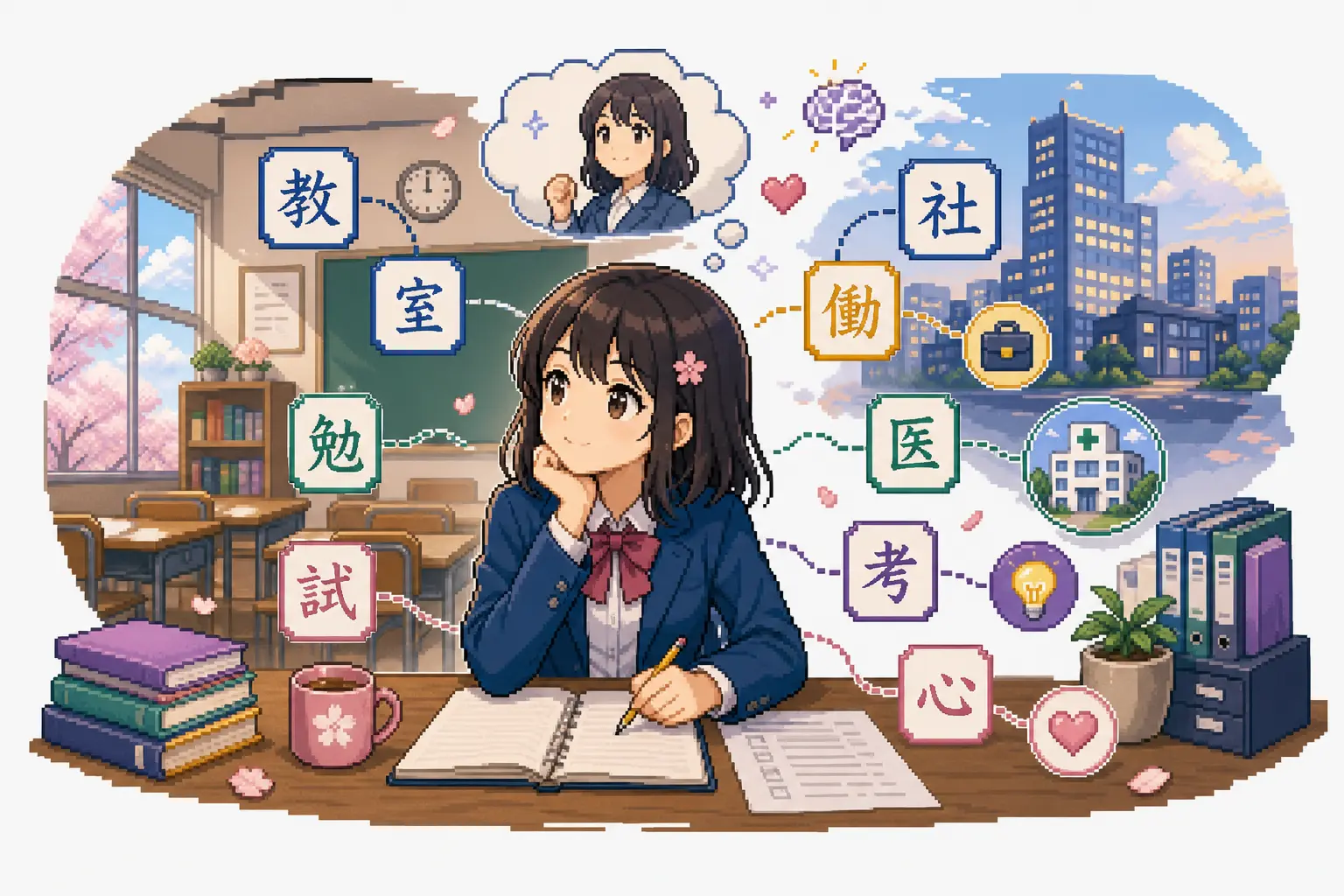
1. School & Education (学校と教育)
Education is highly valued in Japanese culture, and the vocabulary surrounding it is precise.
On'yomi
キョウ
Kun'yomi
おし・える、おそ・わる
Examples
- 教える【おしえる】to teach
- 教室【きょうしつ】classroom
- 教育【きょういく】education
On'yomi
シツ
Kun'yomi
むろ
Examples
- 教室【きょうしつ】classroom
- 和室【わしつ】Japanese-style room
- 研究室【けんきゅうしつ】laboratory/professor's office
On'yomi
シュウ
Kun'yomi
なら・う
Examples
- 習う【ならう】to learn (from someone)
- 学習【がくしゅう】learning, study
- 練習【れんしゅう】practice
On'yomi
ベン
Kun'yomi
つと・める
Examples
- 勉強【べんきょう】study
- 勤勉【きんべん】diligent
On'yomi
シ
Kun'yomi
こころ・みる、ため・す
Examples
- 試験【しけん】exam/test
- 試合【しあい】match/game
On'yomi
ケン、ゲン
Kun'yomi
-
Examples
- 試験【しけん】exam/test
- 経験【けいけん】experience
On'yomi
ブン、モン
Kun'yomi
ふみ
Examples
- 作文【さくぶん】composition/essay
- 文学【ぶんがく】literature
- 文法【ぶんぽう】grammar
On'yomi
トウ
Kun'yomi
こた・える
Examples
- 答える【こたえる】to answer
- 答え【こたえ】answer/response
田中先生は日本語を教えています。
Tanaka-sensei wa nihongo o oshiete imasu.
Professor Tanaka teaches Japanese.
昨日の夜、漢字を復習しました。
Kinou no yoru, kanji o fukushuu shimashita.
Last night, I reviewed kanji.
この教室で英語を勉強します。
Kono kyoushitsu de eigo o benkyou shimasu.
I study English in this classroom.
来週の月曜日に、大切な試験があります。
Raishuu no getsuyoubi ni, taisetsuna shiken ga arimasu.
There is an important exam next Monday.
質問の答えを考えて、文を書いてください。
Shitsumon no kotae o kangaete, bun o kaite kudasai.
Think about the answer to the question and write a sentence.
ピアノの練習を毎日しています。
Piano no renshuu o mainichi shite imasu.
I practice the piano every day.
2. Business & Society (仕事と社会)
When working in Japan or dealing with companies, these are some of the most essential kanji.
On'yomi
ギョウ、ゴウ
Kun'yomi
わざ
Examples
- 授業【じゅぎょう】class/lesson
- 産業【さんぎょう】industry
- 営業【えいぎょう】business, sales
On'yomi
ドウ
Kun'yomi
はたら・く
Examples
- 働く【はたらく】to work
- 労働【ろうどう】labor
On'yomi
シャ
Kun'yomi
やしろ
Examples
- 会社【かいしゃ】company
- 社会【しゃかい】society
- 社長【しゃちょう】company president
On'yomi
イン
Kun'yomi
-
Examples
- 会社員【かいしゃいん】office worker
- 店員【てんいん】shop assistant
- 社員【しゃいん】company employee
On'yomi
イン
Kun'yomi
-
Examples
- 病院【びょういん】hospital
- 大学院【だいがくいん】graduate school
On'yomi
イ
Kun'yomi
-
Examples
- 医者【いしゃ】doctor
- 医学【いがく】medical science
On'yomi
シャ
Kun'yomi
もの
Examples
- 医者【いしゃ】doctor
- 学者【がくしゃ】scholar
- 若者【わかもの】young people
On'yomi
ジ
Kun'yomi
こと
Examples
- 仕事【しごと】work/job
- 大事【だいじ】important
- 行事【ぎょうじ】event
私は日本の会社で働いています。
Watashi wa nihon no kaisha de hataraite imasu.
I work at a Japanese company.
スーパーの店員はとても親切でした。
Suupaa no ten'in wa totemo shinsetsu deshita.
The supermarket employee was very kind.
将来、医者になりたいと思っています。
Shourai, isha ni naritai to omotte imasu.
In the future, I want to become a doctor.
病気になったので、病院へ行きました。
Byouki ni natta node, byouin e ikimashita.
Since I became sick, I went to the hospital.
この仕事はとても大事です。
Kono shigoto wa totemo daiji desu.
This work is very important.
大学院で文学の勉強をしています。
Daigakuin de bungaku no benkyou o shite imasu.
I am studying literature at graduate school.
3. Feeling and Thinking (感情と思考)
To understand motives and emotions, you need kanji dealing with the mind and heart.
On'yomi
シン
Kun'yomi
こころ
Examples
- 心【こころ】heart, mind
- 安心【あんしん】relief, peace of mind
- 心配【しんぱい】worry
On'yomi
シ
Kun'yomi
おも・う
Examples
- 思う【おもう】to think, to feel
- 思い出す【おもいだす】to remember, recall
On'yomi
コウ
Kun'yomi
かんが・える
Examples
- 考える【かんがえる】to think over, consider
- 考え【かんがえ】idea, thought
On'yomi
キュウ
Kun'yomi
いそ・ぐ
Examples
- 急ぐ【いそぐ】to hurry
- 急行【きゅうこう】express (train)
- 急に【きゅうに】suddenly
On'yomi
イ
Kun'yomi
-
Examples
- 意味【いみ】meaning
- 意見【いけん】opinion
- 注意【ちゅうい】caution/attention
On'yomi
ミ
Kun'yomi
あじ
Examples
- 味【あじ】taste
- 趣味【しゅみ】hobby
- 興味【きょうみ】interest
On'yomi
ガク、ラク
Kun'yomi
たの・しい、たの・しむ
Examples
- 楽しい【たのしい】fun
- 音楽【おんがく】music
- 楽な【らくな】easy/comfortable
On'yomi
ウン
Kun'yomi
はこ・ぶ
Examples
- 運動【うんどう】exercise
- 運転【うんてん】driving
- 運ぶ【はこぶ】to carry/transport
明日は雨が降ると思います。
Ashita wa ame ga furu to omoimasu.
I think it will rain tomorrow.
よく考えてから、答えてください。
Yoku kangaete kara, kotaete kudasai.
Please answer after thinking carefully.
急がないと、電車に間に合いません。
Isoganai to, densha ni maniaimasen.
If you don't hurry, you won't be in time for the train.
この漢字の意味がわかりません。
Kono kanji no imi ga wakarimasen.
I don't understand the meaning of this kanji.
私の趣味は音楽を聞くことです。
Watashi no shumi wa ongaku o kiku koto desu.
My hobby is listening to music.
健康のために、毎日運動をしています。
Kenkou no tame ni, mainichi undou o shite imasu.
I exercise every day for my health.
4. Cultural Insight: Japanese Work Culture (日本の仕事文化)
The Japanese workplace is famous for its unique customs, many of which are reflected in the kanji we’ve studied.
Zangyou (残業) — Overtime
The word 残業 (zangyou) literally means “remaining work.” In many Japanese companies, it is common to stay late until the task is finished or until the superior leaves. While this is changing with “Work-Life Balance” initiatives, the concept of dedication to the group remains strong.
Nomikai (飲み会) — Drinking Parties
Socializing after work is considered a part of the job in many traditional companies. These parties, called 飲み会 (nomikai), are where employees can relax (to an extent) and speak more freely with their bosses. It’s often said that “Nomunication” (Nomi + Communication) is essential for career building.
Punctuality (時間厳守)
Being on time is non-negotiable. If a meeting starts at 9:00 AM, being there at 9:00 AM is considered “late.” Most employees arrive at least 10 minutes early to be ready the moment the clock strikes.
Contextual Dialogues
Dialogue 1: Talking About the Future (将来について)
鈴木さん、卒業した後、何をしようと考えていますか。
Suzuki-san, sotsugyou shita ato, nani o shiyou to kangaete imasu ka.
Suzuki, after graduating, what do you plan to do?
ITの会社で働きたいと思っています。
Aitii no kaisha de hatarakitai to omotte imasu.
I think I want to work at an IT company.
いいですね。今、プログラミングを勉強していますか。
Ii desu ne. Ima, puroguramingu o benkyou shite imasu ka.
That's nice. Are you studying programming now?
はい、先生に習っています。毎日復習していますよ。
Hai, sensei ni naratte imasu. Mainichi fukushuu shite imasu yo.
Yes, I am learning from a teacher. I review every single day.
とても勤勉ですね。立派な会社員になるから、安心してください。
Totemo kinben desu ne. Rippana kaishain ni naru kara, anshin shite kudasai.
You are very diligent. You will become a great employee, rest assured.
Dialogue 2: At the Hospital (病院にて)
今日はどうしましたか。
Kyou wa dou shimashita ka.
How are you feeling today?
昨日から、頭が痛くて熱があります。
Kinou kara, atama ga itakute netsu ga arimasu.
Since yesterday, my head hurts and I have a fever.
そうですか。この薬を飲んで、家でゆっくり休んでください。
Sou desu ka. Kono kusuri o nonde, ie de yukkuri yasunde kudasai.
I see. You should take this medicine and rest at home.
明日は仕事に行けますか。
Ashita wa shigoto ni ikemasu ka.
Will I be able to go to work tomorrow?
急がないでください。健康が一番大事ですよ。
Isoganaide kudasai. Kenkou ga ichiban daiji desu yo.
Please don't hurry. Your health is the most important thing.
Chapter Summary
- 1教, 室, 習, 勉, 試, 験 form the vocabulary for school and exams.
- 2業, 働, 社, 員, 院, 医, 者, 事 describe the professional world and medical institutions.
- 3心, 思, 考, 意, 味, 楽, 運 relate to internal thoughts, meanings, and physical movement/exercise.
- 4Cultural terms like 残業 (overtime) and 病院 (hospital) are vital for navigating life in Japan.
- 5Japanese often uses separate verbs for logical thinking (考える) and subjective thinking (思う).
Knowledge Check
Which verb means 'to teach'?
Practice Quiz
Which verb means 'to teach'?
- 習う
- 教える
- 働く
- 考える
Select the correct reading for '会社員'
- かいしゃいん
- がしゃいん
- かいじゃいん
- しゃかいいん
What does '試験' (shiken) mean?
- Match
- Experience
- Exam/Test
- Experiment
Which kanji means 'doctor'?
- 医者
- 学者
- 若者
- 社員
In what context do you use '考える' (kangaeru) vs '思う' (omou)?
- 考える is for natural feelings; 思う is for deep consideration.
- 考える is for deep consideration/logic; 思う is for natural feelings/opinions.
- They have exactly the same meaning and usage.
- 考える is only for business; 思う is only for school.
What is the reading for '安心'?
- あこころ
- あんごころ
- あんしん
- やすしん
Which kanji means 'hospital'?
- 大学院
- 少年院
- 病院
- 美容院
Read the word '興味'.
- きょうみ
- しゅみ
- いみ
- あじ
What does '意味' (imi) mean?
- Taste
- Opinion
- Meaning
- Attention
What does '勤勉' (kinben) mean?
- Lazy
- Clever
- Diligent
- Fast
What is the meaning of '趣味' (shumi)?
- Interest
- Hobby
- Taste
- Opinion
Choose the correct kanji for 'exercise'.
- 運転
- 運動
- 運ぶ
- 運命
What does '残業' (zangyou) refer to in Japanese culture?
- Lunch break
- Company party
- Overtime work
- Business trip
Which word means 'grammar'?
- 作文
- 文学
- 文法
- 文字
What is the reading for '音楽'?
- おんがく
- おんらく
- たのしい
- がっき
Applied review
Use what you learned
Focus: Work and study kanji. Try the task before revealing the model.
Produce the Japanese sentence, then compare it with the model answer.
1.Write a sentence using 試験 and 勉強.
Work and study kanji in context
N4 mini-reading
- When do employees receive training?