Adjectives Part 2: な-Adjectives
Learning objectives
- Identify な-Adjectives and distinguish them from い-Adjectives.
- Conjugate な-Adjectives using the Copula (です / でした).
- Use the particle な to connect these adjectives directly to nouns.
- Understand the spirit of Omotenashi (Japanese hospitality).
In the previous chapter, we learned that い-Adjectives can conjugate themselves. But Japanese has a second group of describing words: な-Adjectives (na-adjectives). Grammatically, these words are actually Nouns! Because they act like nouns, they cannot change their own endings. Instead, they rely entirely on the Copula verb (です, じゃありません, でした) to do all the work.
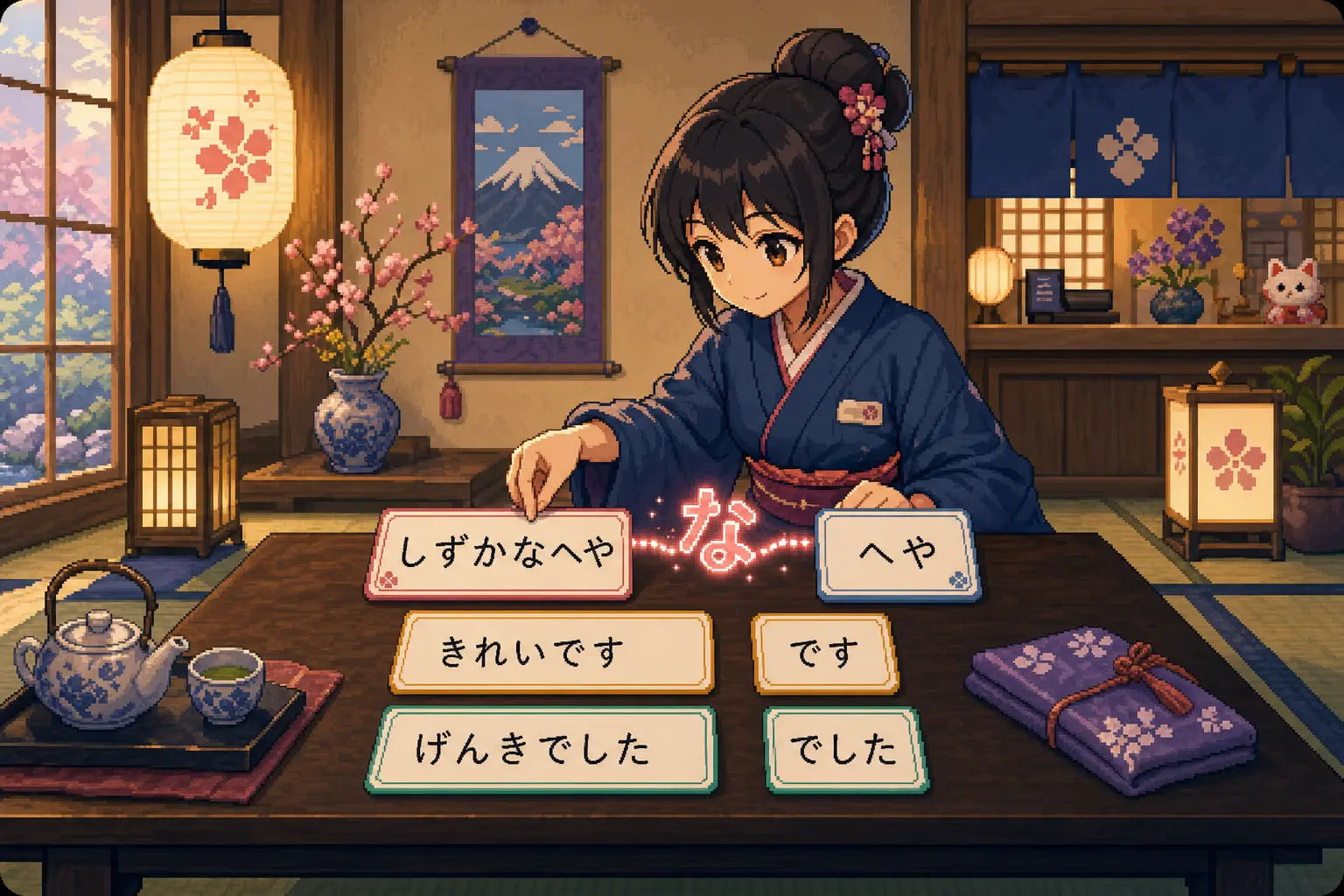
1. Defining a な-Adjective
How do you know if a word is an い-Adjective or a な-Adjective?
- い-Adjectives always end in the Hiragana character い.
- な-Adjectives usually end in something else! (e.g., Shizuka, Genki, Benri).
- The Trick: Some な-Adjectives end in the sound “i” but are spelled with Kanji that hide it. The two most famous traps are きれい (Beautiful/Clean) and ゆうめい (Famous). Despite the “i” sound, these are strictly な-Adjectives!
しずか
な-Adjshizuka
Quiet
にぎやか
な-Adjnigiyaka
Lively / Bustling
きれい
な-Adjkirei
Beautiful / Clean
ゆうめい
な-Adjyuumei
Famous
ひま
な-Adjhima
Free / Not busy
げんき
な-Adjgenki
Healthy / Energetic
この まち は しずか です。
Kono machi wa shizuka desu.
This town is quiet.
たなかさん は とても げんき です。
Tanaka-san wa totemo genki desu.
Mr. Tanaka is very energetic.
きのう は ひま でした。
Kinou wa hima deshita.
Yesterday I was free (not busy).
2. Conjugating with the Copula
Because な-Adjectives act like nouns, you just put them in the “A is B” sentence structure. The adjective root never changes. You only alter the です at the end.
means States a property using the copula.
Formation
Noun + は + Adjective Root + Conjugated Copula
この へや は きれい です。
Kono heya wa kirei desu.
This room is clean.
あした は ひま じゃありません。
Ashita wa hima ja arimasen.
Tomorrow I am not free.
パーティー は にぎやか でした。
Paatii wa nigiyaka deshita.
The party was lively.
にほんご は かんたん じゃありません。
Nihongo wa kantan ja arimasen.
Japanese is not easy.
あの ひと は ゆうめい です か。
Ano hito wa yuumei desu ka.
Is that person famous?
きょねん は びょうき でした。
Kyonen wa byouki deshita.
Last year I was sick.
3. Direct Noun Modification: The “な” Particle
When you place a な-adjective directly before a noun, you must use the particle な (na) to glue them together.
means Modifies a noun directly.
Formation
Adjective Root + な + Noun
しずかな へや です。
Shizukana heya desu.
It is a quiet room.
きれいな はな を かいました。
Kireina hana o kaimashita.
I bought beautiful flowers.
ゆうめいな まち に いきます。
Yuumeina machi ni ikimasu.
I am going to a famous town.
べんりな じしょ です ね。
Benrina jisho desu ne.
It's a convenient dictionary, isn't it?
にぎやかな レストラン で たべました。
Nigiyakana resutoran de tabemashita.
I ate at a lively restaurant.
げんきな こども です。
Genkina kodomo desu.
He is an energetic child.
4. Cultural Note: Omotenashi (おもてなし)
Omotenashi is often translated as “hospitality,” but its meaning goes much deeper. It represents a wholehearted concern for the guest’s needs, often anticipating them before the guest even realizes them.
- Root: The word comes from omote (public face) and nashi (nothing), implying that service comes from the heart without any hidden agenda or expectation of a tip.
- In Language: When you visit someone’s home, they might describe their preparation as benri (convenient) for you or ensure the room is shizuka (quiet) and kirei (clean).
- Practice: It is seen in the way a taxi driver opens the door for you or how a shop clerk bows as you exit. It’s about providing a kirei (beautiful) and shizuka (peaceful) experience for every guest.
Conversation Practice
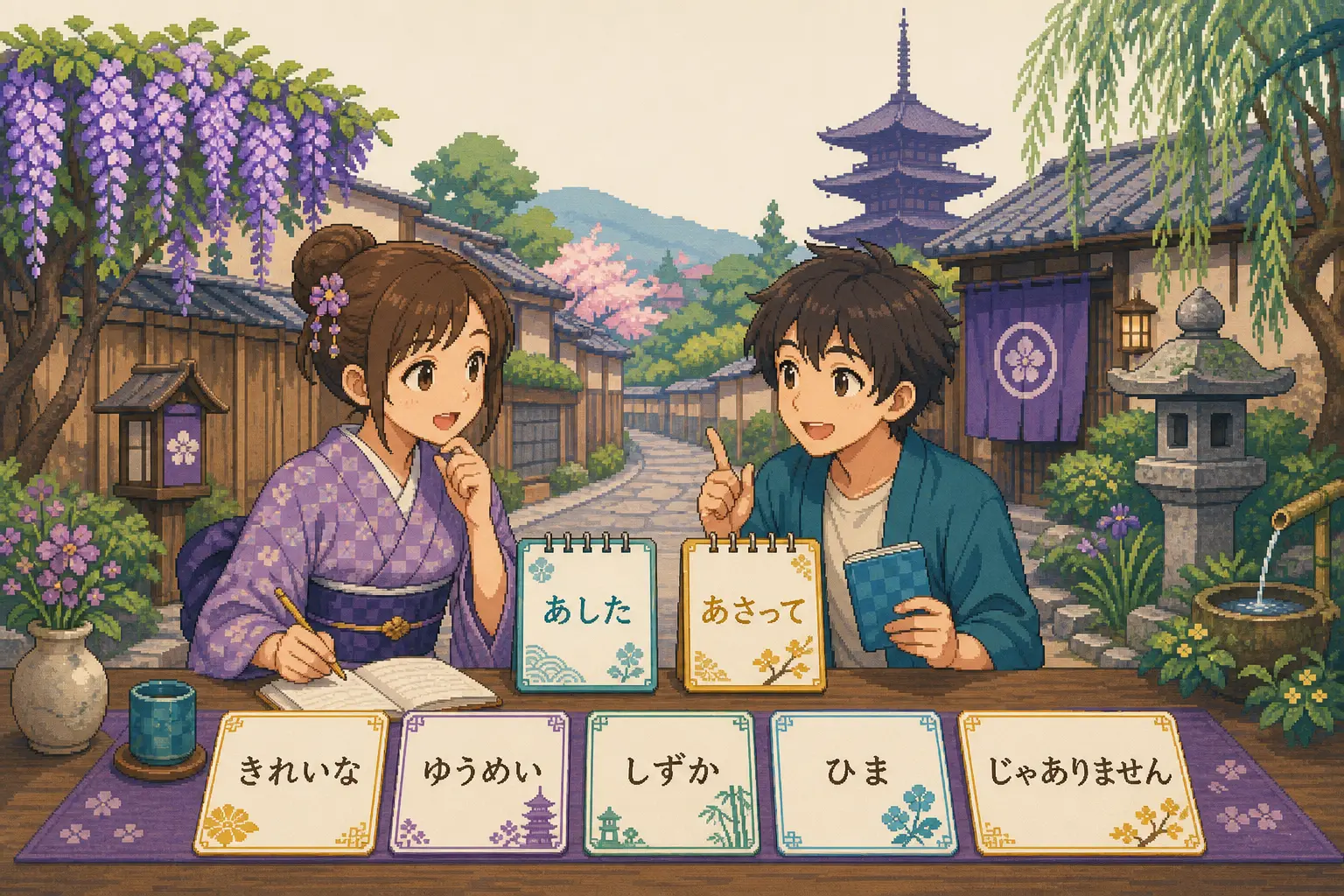
きょうと は どんな まち ですか。
Kyouto wa donna machi desuka?
What kind of city is Kyoto?
きょうと は とても きれいな まち です。 そして、 ゆうめい です。
Kyouto wa totemo kireina machi desu. Soshite, yuumei desu.
Kyoto is a very beautiful city. And it's famous.
しずか ですか。
Shizuka desuka?
Is it quiet?
はい、 しずかな ところ が たくさん あります。
Hai, shizukana tokoro ga takusan arimasu.
Yes, there are many quiet places.
あした、 ひま です か。
Ashita, hima desu ka?
Are you free tomorrow?
いいえ、 ひま じゃありません。 いそがしい です。
Iie, hima ja arimasen. Isogashii desu.
No, I'm not free. I'm busy.
そうですか。 ざんねん です ね。
Sou desu ka. Zannen desu ne.
I see. That's a shame.
あさって は ひま です よ!
Asatte wa hima desu yo!
I'm free the day after tomorrow, though!
Chapter Summary
- 1な-Adjectives function grammatically like nouns and use the copula (です/でした).
- 2Use the particle な ONLY when placing the adjective directly before a noun.
- 3Words like きれい and ゆうめい are な-Adjectives, despite ending in an 'i' sound.
- 4Omotenashi is the spirit of selfless Japanese hospitality.
- 5To describe 'how' an action is done (adverb), change な to に (e.g., shizuka ni - quietly).
Knowledge Check
Test your mastery of な-Adjectives!
Which of these is a な-Adjective?
Practice Quiz
Which of these is a な-Adjective?
- おいしい
- あつい
- しずか
- たかい
How do you say 'The room is clean' politely?
- へや は きれいな です。
- へや は きれい です。
- へや は きれいくない です。
- へや は きれいだ。
Which particle connects a な-adjective to a noun?
- の
- な
- に
- は
What is the negative form of 'げんき' (is not healthy)?
- げんきくない
- げんき じゃありません
- げんき なくない
- げんき でした
Translate: 'A famous person.'
- ゆうめい ひと
- ゆうめい な ひと
- ゆうめい の ひと
- ゆうめい い ひと
Is 'きれい' an い-adjective or a な-adjective?
- い-Adjective
- な-Adjective
Translate: 'きのう は ひま でした。'
- Yesterday I was free.
- Yesterday I was busy.
- Tomorrow I am free.
- Today is quiet.
What does 'Omotenashi' mean?
- A type of food
- Selfless hospitality
- A quiet room
- A famous mountain
Which word means 'Convenient'?
- べんり
- ふべん
- げんき
- しずか
How do you conjugate 'すき' (like) into the past tense ('liked')?
- すきかった
- すき でした
- すき な かった
- すき じゃない
Translate: 'Kireina hana o kaimashita.'
- I bought beautiful flowers.
- The flowers are beautiful.
- I want beautiful flowers.
- Where are the flowers?
Which word means 'Lively / Bustling'?
- しずか
- にぎやか
- ひま
- げんき
What particle is used to turn a な-adjective into an adverb ('quietly')?
- な
- に
- の
- を
Fill in the blank: 'Tanaka-san wa totemo _____ desu.' (Mr. Tanaka is very energetic).
- げんき
- げんきな
- げんきに
- げんきくない
True or False: な-adjectives conjugate exactly like nouns.
- True
- False
Applied review
Use what you learned
Focus: な-adjectives. Try the task before revealing the model.
Produce the Japanese sentence, then compare it with the model answer.
1.Say “Kyoto was quiet and beautiful.”
な-adjectives in context
N5 mini-reading
- When is the town quiet?